2026-11-14 · Javier Soto
Water Damage From San Diego Winter Storms: What Homeowners Should Check First
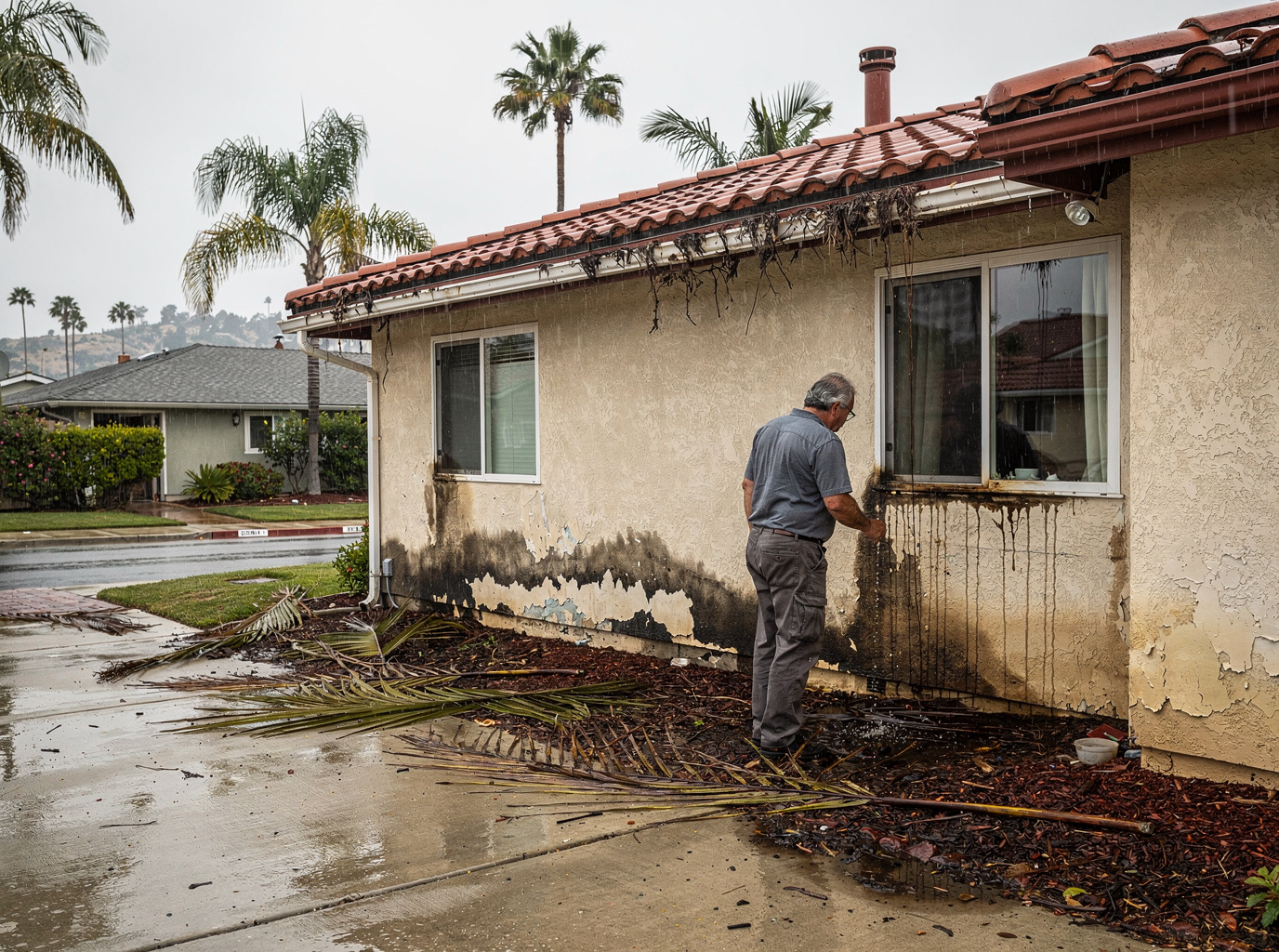
San Diego winter storms often deliver 1-3 inches of rain in a single day, so start by examining the roof edges, attic insulation and foundation walls for new moisture in homes built before 1980 across Downtown San Diego, North Park and Mission Valley.
Inspect Roofs and Gutters First
Heavy rain during winter storms quickly overwhelms clogged gutters on single-story homes common in La Jolla and Pacific Beach. Walk the perimeter and look for sagging sections or debris buildup at downspouts that direct water against stucco walls. In older North Park bungalows, missing or cracked roof tiles allow water to reach underlayment within hours. Check flashing around chimneys and skylights where wind-driven rain from the coast pushes moisture inward. If you notice granules in gutters or soft spots underfoot on flat roofs, note the locations for a targeted Water Damage Repair visit. These checks take 30-45 minutes and prevent attic saturation that can affect drywall ceilings in the rooms below.
Check Attics and Ceilings Next
After roof inspection, enter the attic with a flashlight to scan insulation and rafters for dark stains or damp spots, especially above bathrooms and laundry rooms in Mission Valley condos. San Diego's mild Mediterranean climate keeps attics warm enough that trapped moisture evaporates slowly, leading to mold growth within 48 hours. Feel for soft drywall on ceilings in living areas of La Jolla cove homes where roof decks meet living spaces. Document any musty odors near recessed lights, as these often indicate water tracking along electrical wires. Homeowners in Coronado and Chula Vista should also lift insulation batts to check sheathing for condensation lines that form after repeated storms. Early detection here avoids the need for full ceiling replacement later.
Examine Foundations and Exterior Walls
San Diego County soil expands and contracts with winter rain, creating hairline cracks in slab foundations of 1960s-1970s homes in North Park and La Mesa. Walk the exterior and look for new water lines on stucco at ground level, particularly on the north-facing sides that receive less sun. In Pacific Beach and Ocean Beach, check where patios meet the house for pooling that seeps under thresholds. Basements are rare, but crawl spaces under raised floors in older La Jolla properties often collect water that wicks into floor joists. Note any efflorescence on concrete or bubbling paint on baseboards inside. These signs point to grading issues that local crews address with targeted drainage fixes rather than full excavation.
Review Windows, Doors and Plumbing
Storm-driven rain tests window seals in high-wind areas like Point Loma and Pacific Beach. Open and close each window to feel for resistance or visible water tracks on sills. In Downtown San Diego high-rises and Mission Valley apartments, check sliding door tracks for debris that blocks weep holes. Older galvanized pipes in North Park homes can develop pinhole leaks when pressure drops during heavy rain, so inspect under sinks and behind washing machines. For properties near the San Diego River floodplain, review the related prevention tips in our guide on San Diego River Floodplain Water Damage: Local Prevention Tips. If moisture appears around supply lines, schedule a prompt assessment through our Water Damage Restoration page to limit spread into adjacent rooms.
When to Call for Professional Assessment
If any check reveals active drips, saturated insulation or softening drywall, contact a local crew during business hours at 10801 Vista Sorrento Pkwy, San Diego, CA 92121. We operate Monday through Friday 8am-6pm and Saturday 9am-2pm to respond to storm-related calls from Chula Vista to La Mesa. Homeowners who document findings with photos can speed up the process of identifying the entry point. For stucco homes common across the county, our companion article How to Spot Hidden Moisture in San Diego Stucco Homes provides additional visual cues that pair with these storm checks. Addressing issues within the first 48 hours after rain stops keeps repair scope smaller and protects neighboring properties in dense neighborhoods like North Park.