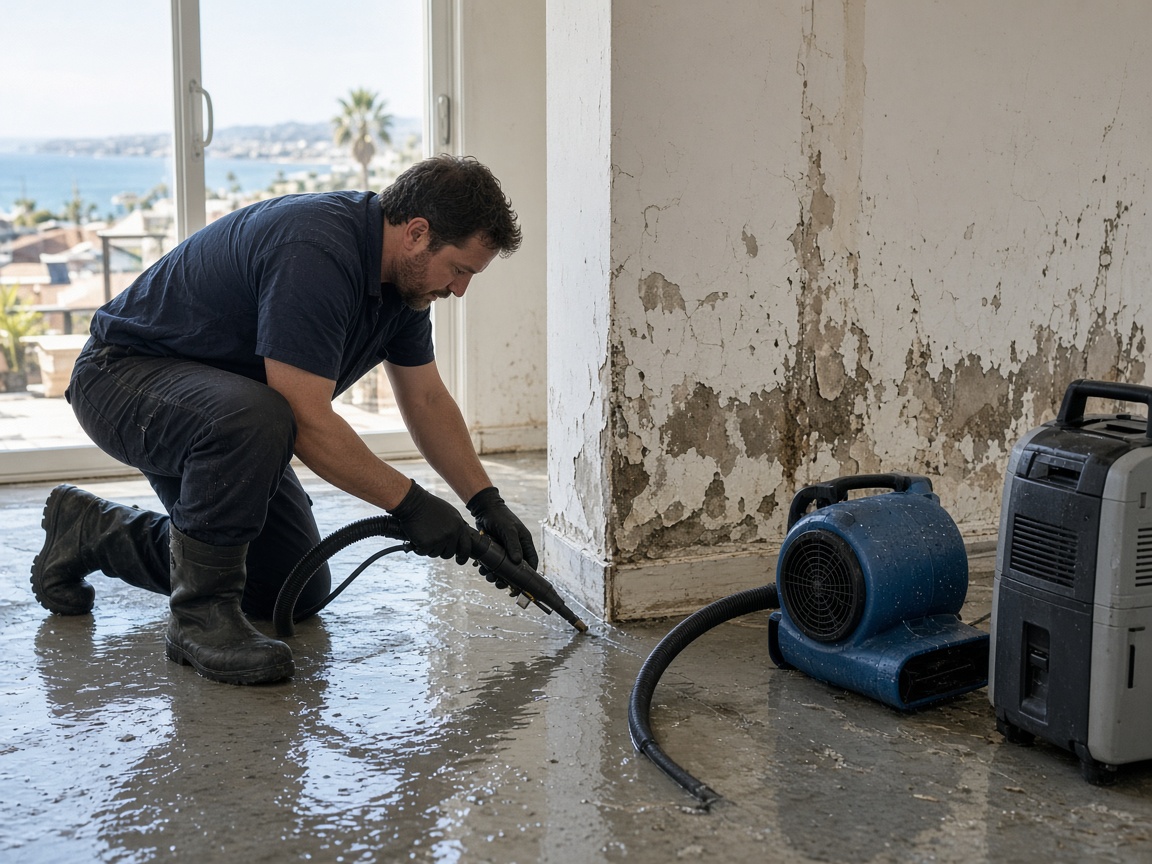
San Diego's mild coastal Mediterranean climate keeps temperatures steady but allows hidden moisture to linger in older stucco and wood-frame homes common in North Park and Mission Valley. When a pipe bursts or a roof leak hits during the occasional winter rain, water travels along stucco walls and into crawl spaces under 1950s-1970s housing stock, creating conditions for mold growth that standard fans miss. Technicians must pull baseboards and use moisture meters on drywall seams to find saturation that coastal humidity slows from evaporating.
Properties near La Jolla Cove and Pacific Beach sit on sandy soil that drains quickly yet allows water to migrate under slab foundations during rare heavy downpours. Restoration crews often cut access panels in concrete to reach trapped water beneath tile floors, then run dehumidifiers for extended cycles because the marine layer keeps ambient humidity above 60 percent. Failure to address this leads to recurring musty odors reported months later by owners in Coronado and La Mesa.
San Diego County building codes require permits for structural drying that affects load-bearing walls, especially in Downtown high-rises and mixed-use buildings. Restoration teams coordinate with inspectors when removing saturated insulation from balloon-framed homes in older sections of the city, documenting moisture levels before and after to satisfy insurance adjusters who review claims from Chula Vista northward.
Technician insight
In San Diego, the thing that catches most people out with Emergency Water Damage Restoration is the way stucco-clad homes in North Park and La Jolla trap moisture behind the paper barrier for weeks after a small leak. The marine layer keeps humidity high enough that homeowners think everything dried on its own, only to find black mold when they finally open a wall. We always pull baseboards and check the bottom plate even when the floor feels dry.
Hidden Moisture Behind Stucco in North Park
A homeowner in a 1962 stucco house noticed a soft spot near the baseboard after a bathroom supply line leaked. Meters showed saturation extending two feet up the wall and into the adjacent bedroom. Crews removed the lower drywall, ran drying equipment for five days, and confirmed dry readings before the owner scheduled repairs.
Emergency Water Damage Restoration Services We Offer
✓Burst Pipe Water Extraction
Rapid removal of standing water from supply line failures common in aging copper plumbing found in La Jolla and North Park homes.
✓Storm Flood Drying
Industrial dehumidification and air movers deployed after rare winter rains affect low-lying areas near Mission Valley and Pacific Beach.
✓Slab Leak Moisture Mapping
Thermal imaging and probe readings to locate water under concrete slabs in Downtown and Coronado properties before mold sets in.
✓Crawl Space Water Removal
Pumping and vapor barrier replacement in raised foundations typical of 1960s homes throughout San Diego County.
✓Drywall and Insulation Replacement
Targeted removal of saturated materials in stucco walls to prevent hidden mold growth after leaks in older North Park residences.
Emergency Water Damage Restoration Cost in San Diego, CA
| Service | Typical Range | What Affects It |
|---|---|---|
| Initial Assessment And Extraction | $350–$750 | Higher in multi-story homes or when slab access is needed |
| Equipment Rental Per Day | $150–$400 | Depends on number of dehumidifiers and air movers required |
| Drywall And Insulation Removal | $2–$5 per sq ft | Includes disposal and antimicrobial treatment |
| Final Moisture Verification | $200–$350 | Required for insurance documentation in San Diego County |
Ranges are typical for San Diego, CA and confirmed with an exact written quote before any work starts.
How it works
- 1
On-Site Assessment
Technician arrives within hours, documents affected rooms with meters, and identifies water source in the specific San Diego neighborhood.
- 2
Water Extraction
Portable pumps and vacuums remove standing water from floors and cavities before it migrates into neighboring units or soil.
- 3
Drying And Dehumidification
Equipment runs continuously while monitoring daily moisture readings until levels match unaffected areas of the structure.
- 4
Material Removal And Cleanup
Damaged drywall, carpet, and insulation are removed and the space is sanitized to stop microbial growth in the coastal climate.
Pricing
Upfront quotes based on square footage affected and drying duration; most jobs require equipment rental fees that vary with humidity.