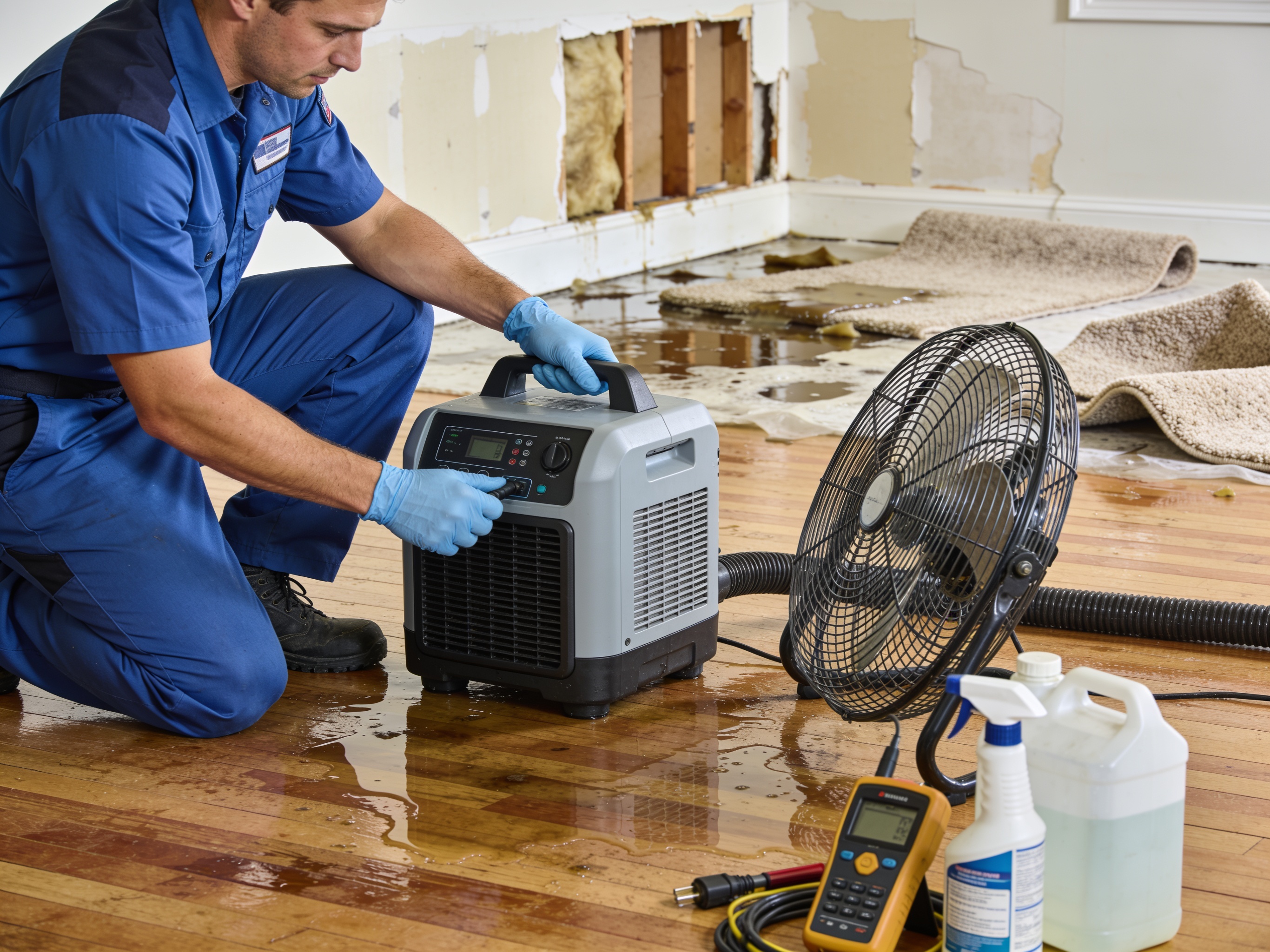
San Diego's older housing stock in North Park and parts of La Mesa often features stucco exteriors over wood framing that can trap moisture after roof leaks or pipe failures. The county's mild Mediterranean climate keeps humidity levels high enough year-round that hidden pockets of water behind walls can lead to structural softening without obvious surface signs. Technicians working these jobs routinely open walls in 1940s–1960s homes to check for rot that would be missed by surface drying alone.
Coastal properties near La Jolla Cove and Pacific Beach sit on sandy or clay-heavy soils that direct runoff toward foundations during rare heavy winter rains. This creates edge cases where water enters through slab cracks or under door thresholds, requiring removal of baseboards and use of air movers aimed at subfloor cavities. San Diego County building codes require permits for any structural drying that affects load-bearing elements, so crews document moisture readings at multiple depths before closing walls.
Downtown high-rises and Mission Valley condos present different challenges with shared plumbing stacks and limited access for large dehumidifiers. Water migrating between units often shows first in ceiling stains on lower floors, and restoration crews must coordinate with HOAs to isolate shutoffs without affecting neighboring units. In all cases, the priority is removing standing water within the first 24–48 hours to limit microbial growth in the region's consistent 60–70°F temperatures.
Technician insight
In San Diego, the thing that catches most people out with water damage repair is how the mild coastal humidity lets moisture stay trapped inside stucco walls of 1950s homes in North Park and La Mesa long after the leak stops. Homeowners often paint over stains only to see them return weeks later because the framing never fully dried.
Hidden Leak in North Park Bungalow
A homeowner in North Park noticed ceiling stains after a winter rain. Inspection found a roof flashing failure allowing water to travel along rafters into multiple rooms. Crews opened ceilings, extracted water, and ran drying equipment for four days before repairs. The home passed final moisture checks with no further staining.
Water Damage Repair Services We Offer
✓Emergency Water Extraction
Rapid removal of standing water from homes in Pacific Beach and Coronado using truck-mounted pumps to prevent further migration into framing.
✓Structural Drying and Dehumidification
Placement of commercial air movers and dehumidifiers in affected rooms of North Park bungalows to pull moisture from stucco and drywall cavities.
✓Basement and Crawlspace Water Repair
Sump pump installation and vapor barrier placement in older La Mesa homes where seasonal runoff collects under raised foundations.
✓Ceiling and Wall Leak Repair
Targeted removal and replacement of water-damaged drywall in Downtown San Diego apartments after pipe bursts or roof penetrations.
✓Sewage Backup Cleanup
Full containment and disinfection of Category 3 water in Mission Valley townhomes, including removal of contaminated carpet and subfloor sections.
Water Damage Repair Cost in San Diego, CA
| Service | Typical Range | What Affects It |
|---|---|---|
| Water Extraction Visit | $350–$750 | Higher in multi-story homes or when pumps must reach lower levels in Downtown buildings. |
| Full Structural Drying | $800–$2,200 | Varies with number of rooms and days required in older North Park or La Mesa homes. |
| Sewage Backup Remediation | $1,200–$3,000 | Includes containment and disposal; larger in properties near Chula Vista with shared lines. |
Ranges are typical for San Diego, CA and confirmed with an exact written quote before any work starts.
How it works
- 1
On-Site Assessment
Technician inspects all affected rooms, uses moisture meters on walls and floors, and identifies the source while documenting conditions in the specific San Diego neighborhood.
- 2
Water Removal
Standing water is extracted with portable and truck-mounted equipment, followed by immediate removal of saturated materials that cannot be salvaged.
- 3
Drying And Monitoring
Industrial drying equipment runs for several days with daily moisture readings recorded to confirm hidden cavities reach dry standards.
- 4
Repair And Restoration
Damaged drywall, flooring, and trim are replaced, then surfaces are prepped for painting or flooring installation by the homeowner's contractor.
Pricing
Upfront quotes provided after inspection; final cost depends on square footage affected and access to hidden cavities.