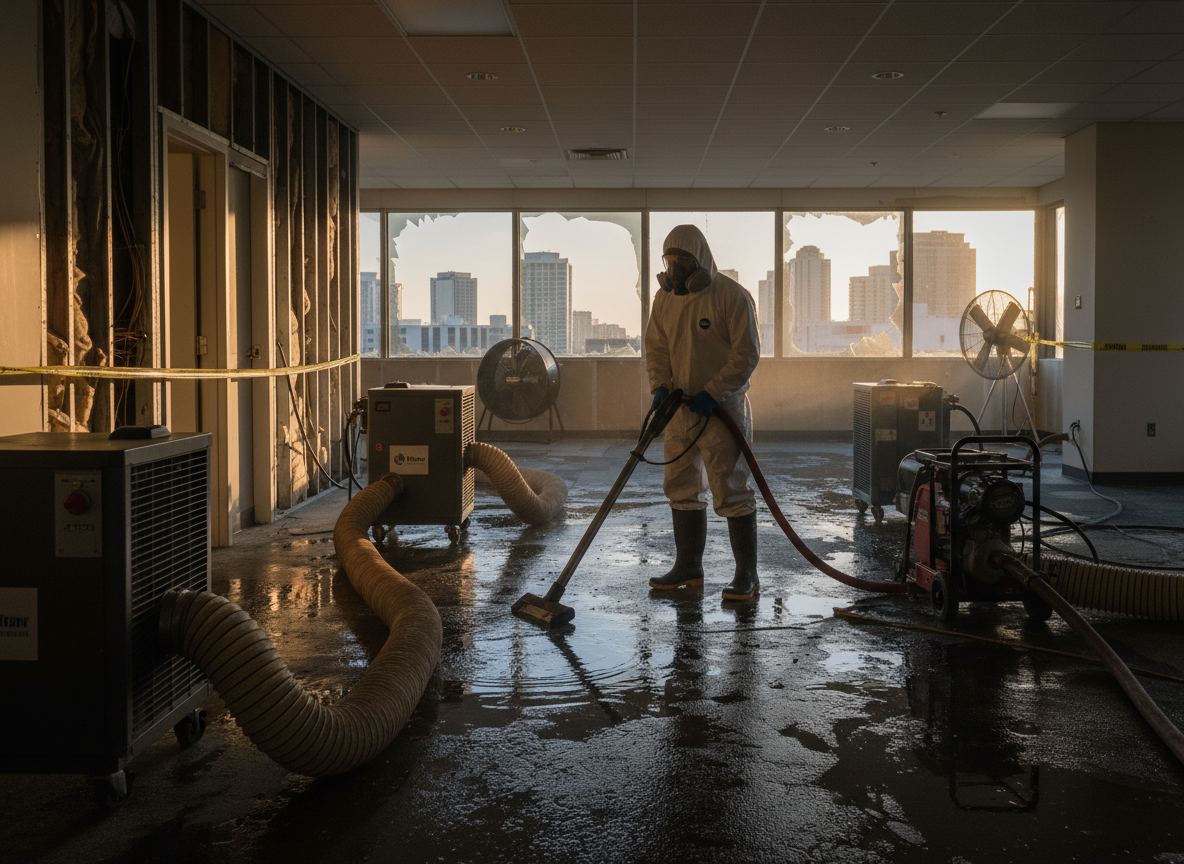
San Diego's mild coastal Mediterranean climate keeps temperatures steady but brings persistent humidity that slows moisture removal in commercial structures. Older buildings in North Park and Downtown often have plaster-over-lath walls and flat roofs that trap water longer than newer tilt-up warehouses in Mission Valley. Extraction crews must account for these differences to prevent hidden mold growth between floors.
Commercial jobs frequently involve mixed materials such as concrete slab floors, suspended ceilings, and HVAC systems that spread moisture through ductwork. Technicians working in La Jolla Cove-area hotels or Coronado retail spaces routinely isolate affected zones to keep businesses operating while drying proceeds. Failure to map utility lines before cutting can trigger electrical shutdowns that extend downtime.
San Diego County code requires permits for structural repairs after water events exceeding certain square footage. Crews document moisture readings at multiple depths because coastal fog can reintroduce humidity overnight in Pacific Beach and Chula Vista properties. Proper containment prevents cross-contamination into adjacent tenant spaces common in multi-unit commercial centers.
Restoration timelines shift with seasonal marine layer patterns that keep relative humidity above 60 percent for weeks. Technicians use desiccants more often than in inland counties when addressing leaks near the USS Midway Museum waterfront or Balboa Park facilities. Final clearance testing confirms both visible dryness and acceptable moisture meter readings before rebuild begins.
Technician insight
In San Diego the thing that catches most people out with commercial water damage restoration is the marine layer that keeps humidity elevated for days after the initial leak. Buildings in North Park and Downtown with older plaster walls hold moisture far longer than newer Mission Valley concrete tilt-ups, so crews often need extra desiccant days before drywall can be replaced.
Mission Valley Office Roof Leak
A flat roof leak during a marine layer event allowed water into suspended ceilings across two floors of a Mission Valley office building. Meters showed elevated moisture in both the top-floor drywall and the slab below. Extraction and targeted drying prevented mold in the HVAC return while the tenant continued operations on the ground floor.
Commercial Water Damage Restoration Services We Offer
✓Office Building Water Extraction
Rapid removal of standing water from carpet, subfloors, and cubicle areas while protecting electronics and file storage in multi-story San Diego offices.
✓Retail Space Moisture Remediation
Targeted drying of display floors and stockrooms in North Park and La Jolla storefronts to reopen sales floors with minimal inventory loss.
✓Restaurant Kitchen Damage Repair
Extraction and sanitation of grease-laden water from commercial kitchens in Mission Valley and Downtown locations followed by equipment drying and floor restoration.
✓Warehouse Slab Drying
Injection drying and dehumidification of concrete warehouse floors in the Sorrento Valley and Chula Vista industrial zones to protect pallet inventory.
✓Hotel Guestroom Restoration
Room-by-room water removal and rebuild in Pacific Beach and Coronado lodging properties while maintaining guest operations in unaffected wings.
Commercial Water Damage Restoration Cost in San Diego, CA
| Service | Typical Range | What Affects It |
|---|---|---|
| Initial commercial assessment | Free | Includes moisture readings and written scope |
| Water extraction | $800–$2,500 | Depends on water volume and floor count |
| Equipment drying package | $1,200–$3,500 | Daily rates for air movers and dehumidifiers |
| Structural drying extension | $600–$1,800 | Additional days required in high-humidity coastal zones |
Ranges are typical for San Diego, CA and confirmed with an exact written quote before any work starts.
How it works
- 1
On-Site Assessment
Technicians arrive from the Vista Sorrento Parkway location, map moisture with meters, and identify affected materials in the commercial space.
- 2
Water Extraction
Pumps and wands remove standing water from floors, walls, and fixtures while isolating HVAC zones to limit spread.
- 3
Drying And Dehumidification
Air movers and desiccants run continuously, with daily readings taken until moisture levels match unaffected areas of the building.
- 4
Rebuild And Clearance
Damaged drywall, flooring, and fixtures are replaced, followed by final moisture verification before the space returns to use.
Pricing
Upfront quotes issued after on-site assessment during business hours.